
Episode #60
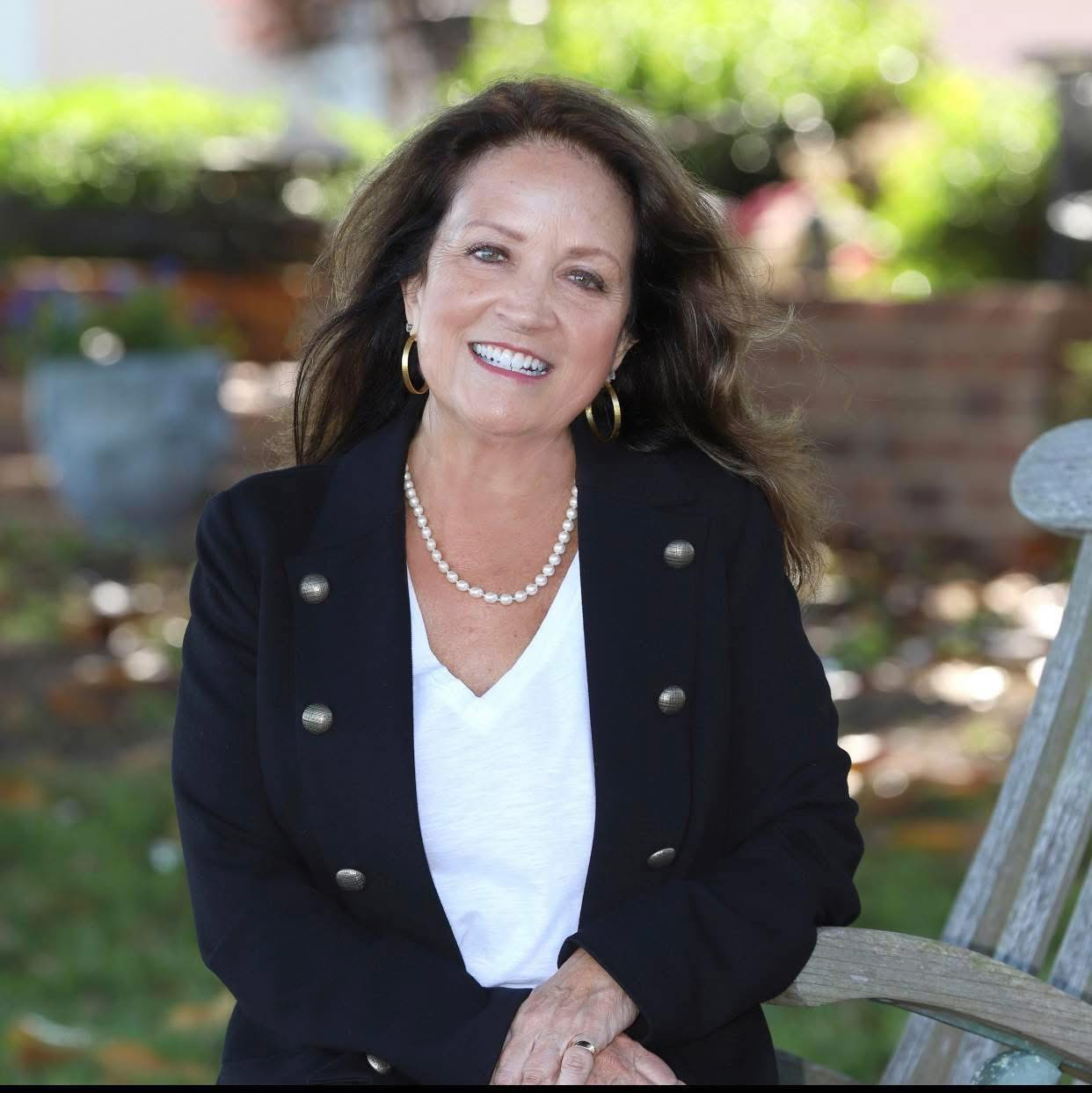
Tina Holt
Episode Title:
Green Bananas & Grit: How Tina Holt Turned Adversity into Purpose, Leadership, and Impact
Episode Description:
In this deeply powerful and inspiring episode of Fanatical DreamHer, host April Kemp sits down with Tina Holt—author of Green Bananas, regional vice president in real estate, coach, and two-time breast cancer survivor.
Tina shares her extraordinary life journey, from growing up as the caretaker of an alcoholic parent to building a highly successful career in real estate leadership. With raw honesty, she recounts her battles with breast cancer—twice—and how faith, mindset, discipline, and service carried her through the hardest seasons of her life.
This episode is a masterclass in resilience, servant leadership, personal responsibility, and choosing purpose over fear. Tina’s story reminds listeners that adversity can become the very platform that empowers us to help others rise.
Key Discussion Points (with time stamps):
(00:02) Introduction to Tina Holt and her book Green Bananas
(01:42) Childhood adversity and being forced to grow up early
(02:29) Learning discipline, service, and sales through food service
(03:52) Entering real estate without formal education—driven by service
(04:59) Influence of mentors like Zig Ziglar, John Maxwell, Og Mandino
(05:49) First breast cancer diagnosis at age 37
(07:00) Choosing action, purpose, and mindset during treatment
(09:11) Second breast cancer diagnosis and redefining resilience
(10:02) Faith, mindset, and curating a positive inner circle
(13:43) Servant leadership and building teams through genuine care
(14:57) Cancer as the greatest obstacle—and greatest teacher
(18:06) Rise through real estate leadership and managing regions
(20:54) Tina’s favorite quote and philosophy on service
(21:38) Parenting, resilience, and preparing kids for real life
(25:59) Advice for women entering real estate
(27:17) Writing Green Bananas and its purpose
(29:12) Closing thoughts on dreaming, purpose, and impact
Notable Quotes:
“If you believe it, you can achieve it.”
“Until someone told me I was sick, I didn’t know I was sick.”
“Nobody is going to raise these boys but me.”
“Input determines output—garbage in, garbage out.”
“People don’t care how much you know until they know how much you care.”
“You get what you need in life by helping others get what they need.”
Takeaways:
Early adversity can build lifelong strength and independence.
Mindset is a decision—and it directly impacts outcomes.
Faith, positivity, and self-talk are leadership tools.
Curating your circle is essential to survival and success.
Servant leadership opens doors titles never can.
Parenting with love and accountability builds resilient adults.
Purpose grows when we use our hardest experiences to help others.
Connect with Guest:
• Email: tinaholtcoaching@gmail.com
• Book: Green Bananas – https://amzn.to/4ahaK6t
Connect with Us:
• Follow April Kemp on Instagram: @fanaticaldreamher
• Stay updated on new episodes: https://www.fanaticaldreamher.com/
• April’s email: april@fanaticaldreamher.com
Join the DreamHer Community:
Subscribe, share, and leave us a review if this episode inspired you.
Don’t forget to tag us with your favorite takeaways using #FanaticalDreamHer on social media!
Episode Transcript:
APRIL: On this episode of Fanatical DreamHer, I'm excited to spend time with Tina Holt, author of Green Bananas and regional vice president of a real estate firm. Welcome to Fanatical DreamHer, the podcast that celebrates the unstoppable spirit of women who dare to dream big and make those dreams a reality. I'm your host April Kemp and each week I have the honor of sitting down with incredible women of all ages who have faced challenges head on and emerged victorious.
APRIL: Through their stories of resilience, passion, and triumph, I hope you'll find the spark to ignite your own journey. This is your time. Let's dream, believe, and achieve together. Welcome Tina.
TINA: Thank you April. Thank you for having me.
APRIL: I am excited to have you on my podcast for many reasons. Your book was inspirational. And at the end, I want to make sure we let people know where they can purchase it.
APRIL: But I love your career climb, your personal climb, and the fact that you beat breast cancer twice. Yes, I did. Quite the dreamer and the doer.
APRIL: let's just jump in. I want to start with you as a child. And when did your strengths start to carry you and make you think where you wanted to go in life?
APRIL: How did it start?
TINA: It started as a young girl who grew up with a mother who was an alcoholic. And I was pretty much her caretaker more than she was my caretaker from the time I was a small child. I was forced to be strong very early in life.
TINA: And I think honestly hindsight is that's the platform that taught me that you can do anything you want to do. If you believe it, you can achieve it.
APRIL: Absolutely, Tina. I know we've also talked about the fact that you learned to sell early. You understood how to conduct yourself, but also how to communicate and be able to sell.
APRIL: Do you think that led to your incredible climb within real estate?
TINA: I think it did, but honestly, I think it all started in the food service business, which I feel that everybody should have to work in at some point in their life, and that is working for the public. And when you're in the food service business, you learn that you must be effective and you must be efficient if you want to be able to survive in that industry. it started there.
TINA: That's really the platform that I use that taught me how to sell and how to serve people. And then from sales, I realized that as much as I loved sales and as much as I loved helping people achieve the American dream in homeownership, I also very much love helping other people reach their highest potential and their goals.
APRIL: And you've been able to do that, too, by leadership as well now. And the women and men you've been able to mentor and influence. Well, let's then, let's take it one step further, what a great beginning.
APRIL: And I think a message for many of our young people to start there, because they will learn much about life and business. Right. let's go onward.
APRIL: I'm trying to remember in your story, tell me how you got to real estate. I know there was a story around that. And did any educational platforms help you at all with your journey?
TINA: As far as educational platforms, no, not really, just the principles of real estate, which is required training. My desire to serve others is what really launched my business. And I will say that I quickly started following the greats Zig Ziglar, Brian Buffini, the list goes on and on.
TINA: I immediately started buying books, Og Mandino, and certain ones, and those his book The Greatest Salesman of the World. That's where it started with my reading, but I only read self-help books, honestly. And I just started following certain coaches, and then of course, John Maxwell, who is one of my very favorites, and I'm still under his coaching program.
TINA: I just learned to start following the people that have already done what I'm trying to achieve and are doing it well, and can relate to people in ways that relates to me. I seek to serve. That's what I do.
TINA: It's what I love to do. that's where it all came from, honestly, and those are the people who inspired me through books or events or whatever the case may be.
APRIL: I love that. I know in college people were saving up for trips or beer or whatever. I saved up for Zig Ziglar seminars and I will tell you I've met him and I have very few regrets in my life, but he invited me to work for him one summer.
APRIL: And instead of doing that, I chose to be a lifeguard. Now I think about that still a lot because he meant much to me. And I'm with you about people that we respect and admire in those books.
APRIL: It's just an investment. It's a deposit. Yes, it is.
APRIL: I just I love that. Well, here you are. You're building, your incredible career and structure as a leader.
APRIL: You're also a mom and breast cancer comes. Tell me how you didn't just beat it once, but twice, Tina. That's.
TINA: I did. the first time I was diagnosed in cancer was 2002. I was 37 years old and had three children at home and was going through a separation at the same time, which I don't recommend.
TINA: But anyway, life happens, right? And yeah, I was 37 years old and I heard those words that no one wants to hear. And quite frankly, I found the breast cancer on my own, spoke to my doctor about it.
TINA: And because of my age and my history, she felt that it was okay, just let your GYN know when you go back to her in six months. But my gut said no, seek it out now. I got busy the same day, found someone who would do an ultrasound and found out within 24 hours I had breast cancer.
TINA: I'm glad I followed my gut feeling on that. yeah, at 37, I was diagnosed with infiltrating ductal carcinoma. And all I can remember April was two things.
TINA: One fear tried to instantly set in. But then I thought, what, no, because when I got off the phone with the doctor, it really takes the wind out of you, it does, I turned around and saw my three boys standing there. And instantly the fear turned into, I don't want to say anger, but just intimacy.
TINA: And that no, nobody is going to raise these three boys, but me, nobody. And if nothing else, I'm going to die trying. that's what I did.
TINA: And at that time, my cancer was aggressive enough that I qualified because you have to qualify for clinical trials. And I did qualify and they were having some of the best success with those at that time. I opted to do that, which consisted of a lumpectomy, 18 rounds of chemo, and 28 rounds of radiation.
TINA: And I just decided at that time, I really can't say divine intervention, but I decided, what, life is short. We take every day for granted. And if you don't think every day is a good day, try missing one.
TINA: And I decided, what, I'm going to flip my first house. while I was going through treatment, I decided to flip my first house, bought my first house with a partner, did the work would leave chemo and go paint the house or go to the office and sell real estate, whatever I had to do. But I was just determined that I've got to keep life normal.
TINA: That was big for me is keeping life normal. it was less focused on the disease, because I looked at it this way until somebody told me I was sick. I didn't know I was sick.
TINA: I refused to adopt the mindset that I'm sick. that happened. And gratefully, 14 years went by in a blink of an eye.
TINA: And 14 years later, I faced a second diagnosis. Prayer was answered, I was able to raise my boys and upon the second diagnosis, my boys were grown, married and had their own children. But I wasn't finished doing life yet.
TINA: But I did, I did somewhat crumble when I heard the words this time, you have triple negative, which has the highest reoccurrence rate in breast cancer. And that was in 2016. But here we set April and January of 2026.
TINA: And I'm here. And I made a deal with myself and with God 20 some years ago with the first diagnosis that every day you give me I'm going to do what I can to make a positive difference in the lives of others.
TINA: And I've done nothing less than that.
APRIL: Absolutely. Tina, just a winner's mentality, always how you live, but I love that you're refusal to focus on a disease. Instead, what you're going to do for yourself in the world.
APRIL: And I, I've told you, obviously we know each other. Your strength is just amazing. I always call a saspot, strong and sassy women, but you're that times 10.
APRIL: And I just really respect your mindset. And also the fact that you won, winners win, and you made that decision. And I love that.
APRIL: Thank you. Who helped you the most through it? Clearly you were your biggest cheerleader and we've talked about that.
APRIL: That's important.
TINA: First and foremost, it was my faith, hands down, and it was my faith, it was my support system. I quickly learned upon the first diagnosis that, input determines output in life. I don't care who you are, garbage in, garbage out.
TINA: I had a lot of negative nancies in my life that I didn't really realize, April, prior to that first diagnosis that they were just negative nancies. I think we all know that person that if you ask them how they're doing, they're going to give you 10 minutes of negativity. They've, they've got a problem for every solution and no disrespect.
TINA: Life happens and some people do have a heavy time from time to time. We all do. But I learned real quickly, it's really important to stay away from the negativity.
TINA: I had to cut some people out of my world, out of my circle. Didn't mean I don't love them, but it just meant they're not good for me and where I am, what I'm dealing with and where I'm trying to go. I had to, I had to change my circle and even with some family, I had to, to have straight up conversations and say, I can't deal with your negativity and survive this.
TINA: I can't deal with having conversations with you when you're focused on the people that who have died from breast cancer. I'm focused on surviving breast cancer and I'm not saying that people die because they're not focused on it. we don't know when our numbers up, but I knew that I had to take all the strength I had, especially upon the second diagnosis to fight this because the first time is a fight.
TINA: Second time is, it's, it's a battle. It's a war. And I knew what I had to do and I've tried very hard to maintain that to this day.
TINA: I still know negative people. I don't love them any less and I'll do anything I can, but I can't change their mindset only they can. And I don't, I stay in enough news to know what's going on, but I don't soak up the news a sponge because I feel if we all just focused on what can I do to make a positive difference for somebody else today, the world would be a better place.
TINA: I can't control what's happening in the world, but I can do something to make something better for someone else today in this moment. true.
APRIL: And I know we've talked to I love the part about the tribe you pick them You're careful as to who you allow in and to stay I talk about I just talked about this in a huge Seminars that every year at the first week. I take a look back In the year we all do reflection before we plan and I take a hard look at my circle And I'm here to tell you doesn't matter if you have a master's in counseling It doesn't matter if you're a top life coach. It doesn't it doesn't matter inevitably Certain people will sneak in but your job is to take a look and make sure They are not allowed back in if they haven't earned the place And I know we've talked about that I just I think that is such a part of a woman being successful in every aspect of her life Absolutely.
APRIL: that's big. Okay, you beat it. You took on the war and you beat it and Tell us about Then because you've continued to build clearly Regional vice president you're well known, that in several areas you've built incredible teams How did you take that and then move on and move forward and take it to the level?
APRIL: Cuz you've achieved it, which is fantastic
TINA: I just feel when you genuinely care about people and people know that you care, right? People don't care how much until they know how much you care. And I think that I am just, I try very hard to always be transparent.
TINA: I say what I need to say, whether it's easy or hard, doesn't matter. I don't mind difficult conversations, but people know my heart. And I think that when you serve people from your heart, not your title, that they follow you.
TINA: And I feel because of the way I genuinely serve people, doors have opened. And I can't say it's anything more or anything less than that. I really think it's just the way I love people and the way I serve people, that in and of itself has opened doors for me.
APRIL: Yes, I think you're the example of servant leadership, and I think that much happens when that's your priority. I think this is just powerful. Tell me about what is the greatest obstacle along your life, whether it's your career, whether it was the fact that you beat this incredible disease twice.
TINA: I would say that's probably the biggest obstacle, raising children always presents obstacles, but it's the most important job on the planet, in my opinion. hands down, that is the most important job I've ever had, is raising my sons. But I will say, I guess, honestly, overcoming cancer has definitely been the biggest obstacle because while it's the worst thing that ever happens far, it's also the best.
TINA: Because it's the most enlightening thing ever. For instance, I had a dear friend call me yesterday and she said, I've got some bad news Tina, I've been diagnosed with stage two uterine cancer. And she said, I'm in your club.
TINA: And I said, well, I'm sorry, this is the one club that I don't want people to join with me. But at the same time, it's the most enlightening club you'll ever be in. Because it tells you that, we take seasons for granted, April, we take everything for granted.
TINA: When you're sitting in that seat and someone tells you could die, you wonder, is this the last winter that I'll see? Is this the last spring, I can remember at my first diagnosis, seeing the crocuses come out of the ground and thinking, will this be the last season that I see crocuses? And when thoughts that would come, because they do, I would immediately say, no, this is not the last season I will see the crocuses.
TINA: But my point is, is your life changes instantly upon diagnosis? It just does. Your perception of everything changes.
TINA: And I think for me, that was the best thing that could have happened. Because it taught me that the things that I got hung up on and upset about and bent out of shape about or whatever the case may be on the day to day and worried about Ziglar himself used to say, worrying is rocking in a rocking chair, it gives you something to do, but it doesn't get you anywhere. But the things that I would just get upset about at the end of the day, really just don't even matter.
TINA: they just don't matter. I feel that's the biggest obstacle is overcoming cancer, not once, but twice. But the lessons that I learned along the way were worth it.
TINA: And the ability that I have had to coach others to go through chemo with others, sit there with them as they're going through it and help them walk the walk and come out on the other side. I could have never been able to do that had I not walked that road myself. And that's my goal every day, I'm a coach as well.
TINA: But I don't to throw that title around because where I help people is when they're on journeys that I've already been on.
APRIL: Yes, absolutely. Let's talk a little bit about your rise within real estate. I love when you talked about your first flip and when you did it.
APRIL: But tell us, because we had talked about this before, but tell me a little bit more how that rise happened. And that people that are interested and are considering real estate, seriously, they would learn something from.
TINA: The RealRise came honestly in 2005 I partnered with someone and we bought into a Remax franchise and we opened firms for Coldwell Banker, one for Century 21, and I told my partner at that time, I said, if we're going to keep doing this ground up operation for somebody else, we need to do our own thing. we invested in a Remax franchise and we did that for several years and even made it through the crash of the real estate market. But then we decided, we had different plans going forward.
TINA: when our franchise contract was up, we put that to rest. And honestly, I was at a crossroads in my life at that point. My youngest had left for boot camp.
TINA: He was the last to leave the nest. And I thought, what, all three of my kids are in the military. They're all stationed all over.
TINA: There's nothing really keeping me here at this juncture. it doesn't matter where I go as long as I'm near a major airport, if you will. I was honestly getting ready to move to either Florida or Texas.
TINA: I had spent one week in each place and I was I was good with either one. I was willing to flip a coin and wherever it lands, that's where I'll go to continue real estate sales. But I was going to go to work with in new construction in particular.
TINA: When I got a phone call about an old resume I had on Indeed from years prior that I forgot was there and got a call from a regional senior vice president who wanted to interview me, wanted me to take on an office in Virginia Beach. anyway, fast forward, I said, I'll be honest with you. I'm not sure how long I'm going to be around in town.
TINA: I've got plans to move. And he said, well, will you at least come and talk to me? I went and talked to him and he hired me on the spot.
TINA: And I thought, well, I'll keep this job for a year or and then I'll make my move. But anyway, long story short, here I am 13 years later. And I've been good to this company and this company has been good to me.
TINA: And, they were supportive of me when I was going through my second breast cancer diagnosis, but they also know I was there. I'd take off two days after chemo and then I was back in the seat. I just work remotely, if you will, those two days.
TINA: one thing has led to another with this company. But again, the way I serve the agents and the way I work really hard to help them obtain their goals in sales is what has led to one door has opened, another door has opened, another door. I went from managing one office to managing two offices to now managing the region.
APRIL: All right. Well, I guess it's a good time to ask your favorite quote.
TINA: It would be one of Zig Ziglar's and that is you get what you need in life by helping others get what they need.
APRIL: Tina, I know that we have talked before now about the kids today and our young adults being prepared for the world and having resilience, which you and I have talked about. to me, it's one of the most important qualities when you're raising kids. What do you want to say to parents out there that are working really hard, as the hardest job there is, the best, OK?
APRIL: But what would you tell them about raising kids and dealing with young adults now with much anxiety and negativity, really?
TINA: It really is and I'll have to say I was a tough love mother and all three of my sons would attest to that I'm sure all day long. My children knew every single day that I loved them. I never had a problem telling them that, I never had a problem showing them that, but they had responsibilities and they had accountability and I had expectations and very rarely did I not follow through on what those were.
TINA: they knew, I taught them responsibility early on. I really did. I never really coddled them.
TINA: I loved them, but I didn't coddle them because I knew there's going to come a time I'm not going to be here and unfortunately I learned that at the age of 37. It could be today. We never know and I think it's important for parents to realize that once we have to prepare them for real world things and they're everything to us, but they're just somebody to the rest of the world and nobody's going to love them we love them and nobody's going to want what's best for them we want what's best for them, but I think it's our duty to prepare them for real life situations.
TINA: employers don't want to hear excuses. You have to be prepared to deal with everyday life. for instance, my sons knew that, once you turn 18, I love you, but all I owe you now is to love you.
TINA: What are you going to do with your life? Boot camp or college? Pick one.
TINA: And they learned and also I really, really enforced getting out of your comfort zone because there's no growth there and they could have easily been comfort zone guys, but they're not, they're at a young age. They've seen the world. They've defended the country.
TINA: They've done things that are totally uncomfortable for them, but I also feel that was empowering them for everyday life and real world situations my youngest bought his first house at 19 years old in Colorado and he bought a short sale and I wanted, I wanted to help him. I wanted to jump in and he said, mom, I've got this. You've been selling real estate my whole life.
TINA: I don't need your help. He did it on his own. But my point is this, their life is about choices and consequences and I feel we're not doing our children any favors if we're not teaching them a trade in addition to, electronics and technology because all of that is great and I use it every day, but I also know how to use my hands and I know how to use my head and I just think it's important.
TINA: I wish we had trade back in schools. I wish we were teaching kids how to do their own plumbing, their own electrical work, their own woodwork, their own mechanics and those things. But I'm not saying where we are is a bad place, but what I'm saying is I am astonished at the amount of young people that don't know how to change a flat tire.
TINA: Right. That don't know how to drive a five speed.
TINA: That don't know how to stop a leak. That don't know how to turn the water off at the main. You're right.
TINA: And things that. And I feel we're doing a disservice to our young people by not teaching them the basics and the tools that they're going to need more often than they're going to need that screen.
APRIL: Absolutely. I think that is well put. I also have a word doofer that's doing for, overdoing for kids, overdoing for teenagers and young adults.
APRIL: When you rescue, that doesn't build resilience. It doesn't build confidence, love of self. I love what you're talking about.
APRIL: I think that, yeah, the mean mom, I always joke when I hear someone has said that about me. Thank you. It's a badge I wear proudly because I'm certainly not me.
APRIL: I've done everything with love. However, the high expectation theory is how we've lived our lives. Why wouldn't we instill that in our kids?
APRIL: Absolutely. I just love this. Well, in closing, I guess what I want to do is offer an opportunity for you to mention our young women and girls.
APRIL: Is there a tip you have for any of them that want to be involved in real estate one day? If that is their dream, or that is something they've spent time thinking about or researching, what would you say?
TINA: I love to help people in this industry, but many people come into this industry with a misconception. And I don't say this to be negative, I say it's because it's true. Every morning when you wake up, you're unemployed.
TINA: You're only going to eat based on your sales and you're only going to live based on your sales. It's a sales job, it's commission only. But what I love to do is help women build a solid business, build their own sphere, build their own solid business through genuine relationships that will last them a lifetime.
TINA: That's what I'm here to do. But I cannot motivate people. I can teach people, I can train people, I can tell you everything you need to do to be as successful as you want to be in this business, but I can't motivate you.
TINA: When your feet hit the floor in the morning, you need to find your own motivation. I'll give you everything else you need.
APRIL: perfectly said. Tina Holt, this has been such a pleasure. I have loved getting to know you and the fact that the listeners are able to hear your story.
APRIL: I want them to buy your book because I loved it and have recommended it to many. It's called Green Bananas and you tell our listeners where they can purchase it.
TINA: The easiest place to purchase the book, April, is on Amazon. Believe it or not, there's more than one book out there titled Green Bananas, but it's by Tina Holt, clearly, and it's got a picture of Green Bananas on the front of it. But it has a lot to do with my story, where I come from, how I got where I am, and the challenges that I faced, and how I overcame, and I find it's inspirational whether you're 16 years old or 80 years old.
TINA: anyway, I think that we all have a lot of pent-up talent, and my job and my desire in life is to tap into that as much as I can, because I feel many people leave this world having never tapped into near the talent that they have inside. And I make it my job every day to try to find out what that is and breaking that out in others.
APRIL: and you do it very well. The book is a quick read, which I loved, but it's very powerful. And the people that I recommend within my family or my friends that read it said the same, please buy this book.
APRIL: You will be inspired, but it's a book that it's about more than just your career, your life. It's about yourself. And there's no more important investment than that.
APRIL: I wanna thank our listeners for your continued support and our growth. And please tell a friend about Fanatical DreamHer. Thank you much, Tina, for being here and everybody reach out.
APRIL: Tina, if someone wants to reach out by email and ask you any questions or want you as a coach, I wanna open up that opportunity. How do they reach you?
TINA: The best email for me is tinaholtcoaching, that's T-I-N-A-H-O-L-T, coaching at gmail. com, or I'll give you my cell number. You can call or text any time, area code 2527222203.
APRIL: Thank you much. Everybody have a happy new year. Stay healthy, safe, and happy.
APRIL: Thank you much for joining us. And always remember, keep dreaming and never forget, the world always makes way for the dreamer. We'll see you next time.