
Episode #59
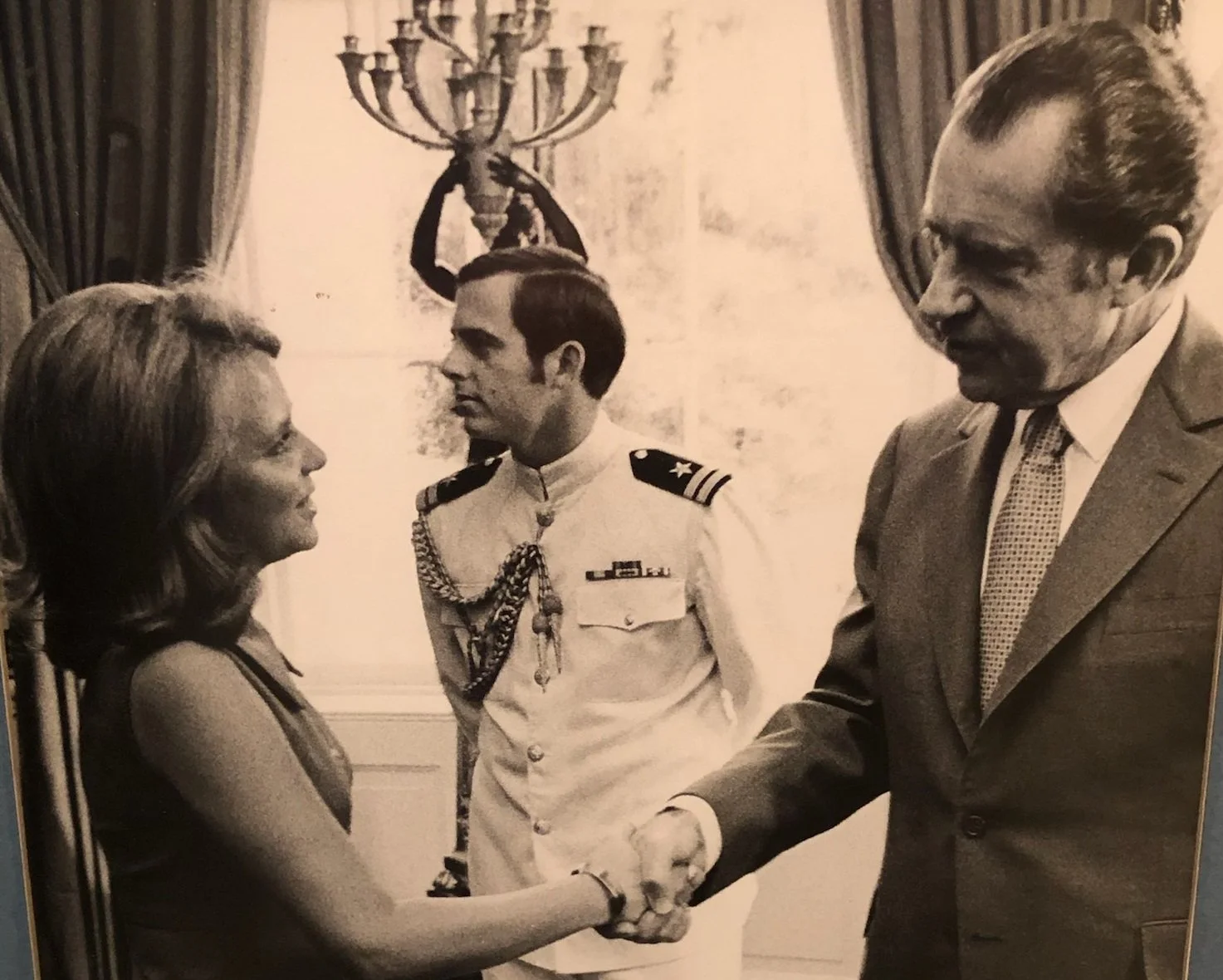
Joni Stevens
Episode Title:
A Life of Integrity: Serving the White House and Following a Dream Through History
Episode Description:
In this remarkable and deeply moving episode of Fanatical DreamHer, host April Kemp sits down with Joni Stevens, a woman whose career placed her at the very heart of American history. Joni served at the White House for over 25 years, beginning just ten days after the Watergate break-in in 1972 and continuing through multiple administrations—from President Nixon through President Clinton.
From a childhood moment peeking through the White House fence and receiving a wave from President Kennedy, to assisting at historic events and serving alongside First Ladies and military leaders, Joni’s story is one of timing, courage, integrity, and quiet leadership. This episode explores how passion for history, openness to opportunity, strong mentorship, and a deep commitment to service can shape an extraordinary life.
Listeners will walk away inspired by Joni’s humility, resilience, and belief that following your heart—while staying grounded in integrity—can lead you exactly where you are meant to be.
Key Discussion Points (with time stamps):
(00:02) Introduction to Joni Stevens and her historic White House service
(01:34) Childhood roots in Cooperstown and early love of history
(01:54) The defining moment: seeing President and Mrs. Kennedy at the White House
(02:24) Early career steps and political work in New York
(03:05) Receiving the call from the White House just days after Watergate
(04:02) First moments working inside the White House
(04:50) Embracing opportunity, risk, and “right place, right time” moments
(06:40) Navigating change across multiple administrations
(07:59) Building lifelong relationships and becoming part of a White House “family”
(09:22) Milestone moments: Nixon resignation and POW dinner
(11:11) Skills that supported long-term success: history, communication, adaptability
(12:26) Transitioning into the White House Military Office
(13:20) Mentorship and the defining lesson of integrity
(15:27) Personal sacrifices and work-life balance challenges
(16:35) Journaling, reflection, and healthy self-talk
(17:55) Emotional highs and lows of serving through history
(18:56) Openness to people of all backgrounds and abilities
(20:17) The role of family and spousal support
(20:57) Advice for young dreamers and future public servants
(22:57) Knowing when it’s time to move on and follow the next chapter
(24:41) A favorite quote on servant leadership from President Reagan
Notable Quotes:
“What a great place to work.”
“Try it. If you don’t like it, at least you tried.”
“Integrity.”
“You have to watch, look, and learn.”
“When it’s no longer exciting to show your pass at the gate, it’s time to move on.”
“There is no limit to what a man can do or where he can go if he doesn’t mind who gets the credit.”
Takeaways:
Childhood curiosity can spark lifelong purpose.
Being open to opportunity often matters more than having a perfect plan.
Integrity is the foundation of lasting leadership.
Mentorship can quietly shape the course of a career.
Service-oriented work creates deep and meaningful connections.
Writing, reflection, and healthy self-talk help navigate difficult moments.
Success isn’t about recognition—it’s about contribution.
Connect with Guest:
• Email: ponspaws@widomaker.com
Connect with Us:
• Follow April Kemp on Instagram: @fanaticaldreamher
• Stay updated on new episodes: https://www.fanaticaldreamher.com/
• April’s email: april@fanaticaldreamher.com
Join the DreamHer Community:
Subscribe, share, and leave us a review if this episode inspired you.
Don’t forget to tag us with your favorite takeaways using #FanaticalDreamHer on social media!
Episode Transcript:
APRIL: On this episode of Fanatical DreamHer, I'm excited to be sharing time with Joni Stevens, who served our White House for over 25 years. Welcome to Fanatical DreamHer, the podcast that celebrates the unstoppable spirit of women who dare to dream big and make those dreams a reality. I'm your host April Kemp and each week I have the honor of sitting down with incredible women of all ages who have faced challenges head on and emerged victorious.
APRIL: Through their stories of resilience, passion, and triumph, I hope you'll find the spark to ignite your own journey. This is your time. Let's dream, believe, and achieve together.
APRIL: This is such an exciting interview. Welcome Joni. Thank you.
APRIL: I'm glad you're here. I just think about you starting 10 days after the break-in of Watergate in 1972, and you served many presidents.
JONI: I did. I was there Nixon through Clinton.
APRIL: Wow. Thank you much for taking this time. Tell me, how did you realize your dream?
APRIL: And tell me a little bit about your childhood and what your dreams were to help you guide how you got?
JONI: here. All right. Well, I come from Cooperstown, New York.
JONI: Cooperstown between James Fenimore Cooper and Abner Doubleday. We have a whole lot of history. I've loved history from the beginning.
JONI: My mother was a wave and served in DC during World War II. And when my brother and I were four, I was 14, we went to DC and we stood at the White House and looked in the fences and through the fence and saw the president and Mrs. Kennedy with their children having their picture taken in front of the phone.
JONI: And then they turned around and they waved at us and I thought, what a great place to work. That's the beginning.
APRIL: Well, tell us some steps you took early to get there.
JONI: I went to a small girl's school for college, I went to New York, I was working at an ad agency and a friend was working on a campaign for Mayor Lindsey to be re-elected. And I thought, well, this is great. I didn't New York as a 22-year-old as much as I thought I would.
JONI: I decided I wanted to work for Governor Nelson Rockefeller. I went and was being vetted by the New York Republican State Committee and they offered me a position there. I was there for, I don't know, two years and got a phone call one day from the special counsel's office at the White House asking me if I would to come for an interview.
JONI: This was two days after the break in a Watergate. And I said to my mom, what should I do? And she said, go for it.
JONI: My dad wasn't as excited about me doing this quickly. But I got on the train, went down, got the interview, went back home, packed my things and started on the 10th of July. Oh my goodness.
JONI: That's how it all, place, time. Right? So.
APRIL: the fact that you loved history got to peek through the back gate of the White House, had a wave, began a career, and voila, you're at the White House. Tell us about your first year. tell us.
JONI: Now, my first office was over in the old executive office building, which is now the Eisenhower building. And it wasn't until the first part of September that I got to go into the White House. And we went to a reception on the state floor.
JONI: I was introduced to President Nixon. I pinched myself because I was in the White House. it took a little while to get there, but I got there.
APRIL: Wow. Joni, how exciting. I got chill bumps.
APRIL: This is good. you landed and you began a career. Tell me how your passion in the sense that how did it affect your journey there?
JONI: Well, I've always, the way I was brought up, it was, try new things, don't sit back, try it, if you don't it, that's okay, at least you tried it. And in January of 73, the man that I was working for was leaving and going and opening up a law firm and asked me if I'd to go with him. On the day of my birthday, I happened to be in the ladies' room with Diane Sawyer and she was working for Ron Ziegler at the time.
JONI: She told me that there was a position open on Mrs. Nixon's staff and maybe I should apply for it. I applied for it and was offered that position.
JONI: But had I, again, time, place, I didn't know anything about that position. But I thought, well, if I get the job, great. If I don't get the job, I have another offer and can go to a law firm.
JONI: Talk about moments. Exactly. It's been chilling the whole time.
APRIL: I just, I also love too, though, that your positivity attracted that conversation most definitely. I talk about this a lot. Strong and sassy women tend to connect in many, many places.
APRIL: And I love the bathroom story there. I just love it. She's, of course, amazing.
APRIL: That is exciting. All right. tell me you're there.
APRIL: You served many different presidents. You were there for 25 years, saw all kinds of change. How did this change you personally?
JONI: Well, I think because each administration brings in a whole new set of people. one has to watch what others are doing. And I've always been a team player, not somebody that likes to be out in front.
JONI: that was one of the things I to watch, look and learn. when it came time for the resignation of President Nixon and then going, Mrs. Ford came down and asked if we'd all to stay with her, which was great, but it was learning her whole team.
JONI: again, just because I'm there doesn't mean that everybody's going to say, oh, well, Joni should stay. you have to have that learning curve going in and meeting new people and seeing how they adjust to life in the East Wing. Wow.
APRIL: you learned a lot about change, personally, because you had to, but I see all the benefits of why it's great.
JONI: experience every day.
APRIL: right? What was your favorite part about your years at the White House?
JONI: There were several experiences that very few people had the opportunity to do. And because of that, I still pinch myself, knowing that I have met a whole lot of people besides presidents and first ladies. I've met a lot of wonderful men and women that I'm still in touch with.
JONI: It's really a family when you work on a small staff, particularly on the first lady's staff. I'm still in touch with people from 50 years ago.
APRIL: I absolutely love that. I always say, too, that many times when we work, we spend more time with our co-workers, the other leaders, the peers, than we do at home. And that's why you want it to be an A, because it affects every part of your life.
APRIL: That's absolutely right. I had been very blessed from a corporate stand and my own company. But boy, when that happens, there's no better family.
APRIL: Exactly. Well, let's talk a little bit about some of the milestones that have stood out along your path here. Well, give me an example.
APRIL: Absolutely. Tell us about what are some of your favorite moments that you are a part of?
JONI: Well, though it was a sad moment, the first one was we were invited, Mrs. Nixon called downstairs the day of the resignation speech and asked all of us to go up onto the state floor. And we went up to the state floor and we were all in our early 20s and we all said, we're not going to cry.
JONI: We're going to be strong. Mrs. Nixon would want us to be strong.
JONI: Well, that was fine until we reached the state floor and the Marine band was playing You'll Never Walk Alone. Well, that did it for a whole lot of reasons. that was my first real memory.
JONI: Then the following year, or 1973, excuse me, I was able to assist at the POW dinner for thirteen hundred returning American heroes. And we spent several days getting ready for it, but then we were out on the lawn with Bob Hope and John Wayne and all these phenomenal people, but mostly all these thirteen hundred returning POWs. That is remarkable.
JONI: those are my two, my really good story and my harder, harder, right.
APRIL: Well, let's talk a little bit about, because all of my listeners, many of them, they hone in on, what do you think the experiences were that helped you the most once you got there? I know you were young, I get it, but you always loved history. What do you think were the experiences that when you got there started you off to this success?
APRIL: Well, I'm not sure.
JONI: I think growing up, my parents were always social. they were always out and introducing us to people and those are the kinds of things that you have to take the courses, you have to know where you want to go and what you want to do that taking history courses, taking public speaking courses. I did a little bit of marketing, advertising just because I was interested in that because I had no idea that I would ever, ever end up in a political world and I'm not really political, which helped me go from one administration to another administration.
APRIL: that is what an interesting take yes and of course currently that makes me fast-forward just in my own mind thinking wow what you could teach people now and that's that is the power of your journey what is the moment you realized because we all when we're on a path I always say there is that very moment when we realize we've got this that we can make this happen I'd love to know when your moment was
JONI: I'd have to really think about that one because during the end of the Ford administration, I was asked to go into the military office. That's how I got to stay through the other administrations. And I think just my work ethic was what it was.
JONI: They knew that I would do a good job, that I was serious about what I was doing, but that I was also very approachable and willing to learn. And I really knew very little about our military prior to going into the military office.
APRIL: I also wanted to ask you, I know this is a little off my normal script, but I wanted to know two things. One, do you feel there's a mentor that made the difference for you? And did you get a chance to mentor?
JONI: One of my very favorite people in the whole world happened to be the deputy director of the White House Military Office, and at that time was a colonel in the Marine Corps. He since went on to be the commandant of the Marine Corps. And as a mentor, he was just fabulous.
JONI: He had a sign on his desk that his wife had needle pointed, and it was two-sided. Both sides said integrity. as he was talking to me, he saw integrity.
JONI: When I was in speaking with him, I saw integrity. I don't know how you can get a better mentor than that.
APRIL: Oh Joni, I love that. What a powerful visual, but also it's a reminder, all the time. That is powerful.
APRIL: Well, and did you get to mentor?
JONI: I've done a lot coming in here to Williamsburg with my
APRIL: I know you went on to service as well at a very distinctive and the Williamsburg in known throughout the world Yes, and I know you do much for them and with them and again Serving which I love I wonder though when you were in the White House Did you get a chance to any of the younger or anyone behind yours that just there?
JONI: wasn't really that opportunity because as I went into the military office, I was then the youngest there, I didn't have younger people.
APRIL: But how wonderful that after leaving the White House, you still went on to serve, connect and use all your talents and we just obviously within Williamsburg and beyond appreciate that. Thank you. Let's talk about some obstacles that you may have faced in the journey in the White House and how you overcame them.
JONI: I think one of the biggest obstacles was more on a personal basis because. Yes, I'm there at the White House and yes, there's all this activity going on, but it's a seven to six job, not every day, but many days and sometimes on weekends and if we were traveling. I didn't have as much of a social life because I was there working.
JONI: it was social with in the working environment, but it was in the social life.
APRIL: Well, you clearly met a wonderful man at some point. Yes, I did. But it wasn't during the early time.
APRIL: It was during the Ford administration. All right. I love the example with your mentor with the word integrity, but what is your go-to self-talk?
APRIL: Maybe was it then or if it's now, you're a very positive woman, what do you say to yourself when the going gets a little tough some days?
JONI: usually get on the computer and write what is bothering me. And by doing that, I'm getting it out because I really don't confrontation at all. And if I do it with just me, I can write it out.
JONI: I can then read it. Lots of times I'll go to my husband and say, what do you look at this? What do you think?
JONI: Or go to a coworker or a good friend and talk it out. that's how I've always done it.
APRIL: Well, journaling too changes lives, I think that's good. I know that I do the same, but I sometimes will burn it because I was taught, this was in Seattle years ago, that if you, when you're writing it down, if there's something you really need to put closure on, that you can watch it in a fire, you can wet it and throw it away. Exactly.
APRIL: I just, I hope for our younger women that they learn earlier about closure because then you don't carry it. I thank you for that example. I love that.
APRIL: All right. tell us a little bit about the emotions throughout your dream, if you will, that you experienced. You kept, you were climbing and growing and doing for many people.
JONI: because many people would come in to the White House. I was as excited about meeting them as they were about being in the White House. there were tears because I was excited to meet them.
JONI: There were tears because they were in the way. it was an emotional up and down all the time. And of course, going from administration to administration, when your election night, the person may be going out of office that you wish was going to stay in.
JONI: And people were leaving because they were going with a different administration. there were lots of emotions. Gosh, yes.
APRIL: the time. All the time. All the time.
APRIL: And also, too, I was just sitting here realizing that you met many different kinds of people, and the energy you got from that, I'm sure, is through the roof, but what would you tell our listeners about being open to the differences of all people?
JONI: Well, exactly and I'm talking about young people that were had a disability actors and actresses military people particularly but what my most joy was Having friends come and having me take them on a tour of the White House Because I was talking to one of my college roommates the other day her son Daughter-in-law and Granddaughter are coming to Williamsburg because the granddaughter wants to go to William and Mary her son remembers exactly When he was at the White House with me, he's now 52. He was 13 That makes me really happy
APRIL: Absolutely. Absolutely. Well, we know William and Mary, there's, it's hard to beat it.
APRIL: I know my niece goes and she wanted it since she's little, she'd come here and dress up. And when she got that, acceptance was a big moment for our whole family to be supportive for her and special too, because it's within the family. Yes, exactly.
APRIL: Well, I got myself a little teary eye today. Those are, those are sometimes my favorite interviews. All who's supported you the most along the way and how?
JONI: Probably my parents started all of this because growing up and then going from job to job at the beginning before I went to DC, again, they said, try it. And if you don't go for it, you're never going to know what you missed out on. that and then, of course, my husband's been very supportive since he also had a government career.
JONI: interesting, something y'all.
APRIL: shared in common. Exactly. I love that.
APRIL: Alright, what advice would you give to a young person that wants to follow your similar dream?
JONI: I think taking, once you have a vision of where you want to go, whether it's staying here in the United States or traveling overseas or whatever you want to do, I think knowing the history of where you're going, learning the job that you hope, and then finding somebody within that profession that could mentor you to get to where you want to go.
APRIL: Absolutely, and that's something I wish for far more kids and parents to partner and get in those doors, and I call them informational interviews. I don't care if it's a cup of coffee, at a tennis court, anywhere, any way, because how can you truly visualize and plan until you've talked to someone that does what your dream is?
JONI: Exactly, exactly. And I think I have done some etiquette teaching in the back and that is just important. These days, I know that cell phones are there and they're there for a reason.
JONI: But I don't know that we're losing a lot of the personal conversation between people when we're always on a cell phone and not looking eye to eye at someone.
APRIL: You're when in fact the most important thing is communication and connection. And I love that you pick up your phone. I'm a phone person as well.
APRIL: To hear that there are kids and people afraid of the phone, we need to do a lot of work. Exactly, exactly. But let's see, what else?
APRIL: How would you say that you achieved this career out of the box? Because I've never met a dreamer yet with true personal happiness and success that could not talk about how they did it out of the box.
JONI: Hmm. That's a good question. I think.
JONI: It was just I loved my job. I loved being there. I knew it was hard work.
JONI: I knew that I had friends that would support me. I just kept going. Somebody said to me one time, as I was thinking about, I wanted to have the milestone of 25 years of the White House.
JONI: I just thought that would be a good thing to have. They said, when it's no longer exciting to show your pass, when you're coming through the gate, it's time to retire. And it had nothing to do with the administration at all.
JONI: It was just I need to go and do something else. I think you just have to do what you think is best for you and just follow your heart as to when is the time to make a change, if that's what you want. I love that.
APRIL: that was well put. If anybody wants to reach out and ask you any questions that have a similar dream, is there a way they can contact you?
JONI: They can certainly contact me via email. I don't have, I'm on Facebook, but email would be much better. And what is your email?
JONI: It's P-O-N-S. P-A-W-S at W-I-D-O-M-A-K-E-R. com.
APRIL: All right. I love it. It was slow enough.
APRIL: They can they can get I love it. is there anything in Closing that you would want to share this has been meaningful. Well, I
JONI: looked at your notes and the one thing that I thought of because you asked if I had a favorite quote. Yes. And my favorite quote was on a sign on President Reagan's desk in the Oval Office and it said there is no limit to what a man can do or where he can go if he doesn't mind who gets the credit.
APRIL: Oh, Johnny. That's true servant leadership too. Exactly.
APRIL: Yes, you learn from the best. Yes, absolutely. I just want to thank you much for your time today.
APRIL: Meeting you was such a high point and thank you for agreeing to come on Fanatical DreamHer. Your journey is special and unique and my goal throughout this is to make sure that we're getting those recordings in as a platform for not just now but long term.
JONI: Well, it's been much fun to meet you April earlier this year, I was just thrilled to have you invite me.
APRIL: Oh, honey, thank you much. This has been a very powerful interview, and I'm incredibly grateful. I want to thank all of our listeners out there for everyone's support, and thank you for continuing to share Fanatical DreamHer with your friends and family.
APRIL: We're growing crazy. Thank you much, and I wish everybody a happy and a healthy new year. Thank you much for joining us, and always remember, keep dreaming and never forget the world always makes way for the dreamer.
APRIL: We'll see you next time.